
BRAZILIAN ZOUK HISTORY
From Lambada to Embodiment
ZOUK MUSIC
Caribbean music has always had a major influence on the northern parts of Brazil. ZOUK is one of these musical styles, originating from the French Caribbean islands of Guadeloupe and Martinique. It is often sung in "Creole," a blend of French and African languages. ZOUK rhythm has spread worldwide, but as it became very popular in France, many believe the music originates from there.
THE MODERN ERA: ZOUK EMBODIMENT
"The latest phase in the evolution of the dance shifts the focus from the external, how the dance looks, to the internal – how the dance feels."
ZOUK EMBODIMENT is the art of fully grounding yourself in your own body to meet a partner in total presence. By using techniques from Somatic Awareness, the dancer learns to listen to subtle signals in energy, weight transfer, and breath. Here, the dance becomes a living dialogue and a form of moving meditation, where the technique becomes invisible and the feeling total.
BRAZILIAN ZOUK
This soft and sensual dance originates from Brazil with rhythms from the Caribbean islands. Brazilian ZOUK is a relatively new dance style that emerged in the mid-90s and has quickly spread across the globe. ZOUK can be anything from a funky hip-hop dance to a soft, flowing dance filled with emotion – only your imagination sets the boundaries.
The dance has its roots in Lambada but is danced today to all types of music – often to calmer music like R&B. The style is known for its many head movements, but ZOUK can also be danced entirely without them. Unlike Salsa, which is led with the hands, Brazilian ZOUK is led from more parts of the body such as the legs, arms, shoulders, or head.
Traditional ZOUK (Rio Style)
Developed in Rio de Janeiro around the mid-90s by pioneers such as Adilio Porto and Renata Peçanha. They adapted Lambada steps to the slower Caribbean ZOUK music, creating characteristic movements like the Basic Step, Lateral, Elastico, and Bonus (Boomerang).
LAMBAZOUK / LAMBADA
LambaZOUK, or Porto Seguro style, is the evolution of Lambada and emerged in the late 80s. The style is characterized by high energy, circular movements, and a "feel-good" attitude. Unlike original Lambada, LambaZOUK does not use shaking shoulders; they are instead kept fixed while the hips move. The style has been refined by instructors like Didi Santos and is unique in how the steps are performed in synchronization with all the beats of the music.
ZOUK - DIFFERENT STYLES
NEOZOUK
Created in 2007 by Mafie Zouker & Ruanita Santos. Focuses on modern trends, trance influences, and a shared dance where the roles of leading/following often shift.
FLOWZOUK
Influenced by Arkkanjo in Rio. The movements are extremely fluid, smooth, and emphasize significant body contact and soft transitions.
SOULZOUK
Developed in 2005 by China (Rio). Often called "freestyle" as it is based more on the melody of the song than just the rhythmic beat.
MZOUK
Born in Mallorca (Jefferson Costa). A technical style based on biomechanics and correct body positioning for a safe dance experience.
LYRICAL ZOUK
Created by Lindale Thompson (London). Focuses on the internal chemistry between partners and musical interpretation beyond fixed patterns.
AUSTRALIAN ZOUK
A fusion of Rio-ZOUK & Neo-ZOUK, strongly influenced by instructors like Kadu Pires & Larissa Thayane.
Explore the flow at ZOUK Malmö.
Recommended
ZOUK Book
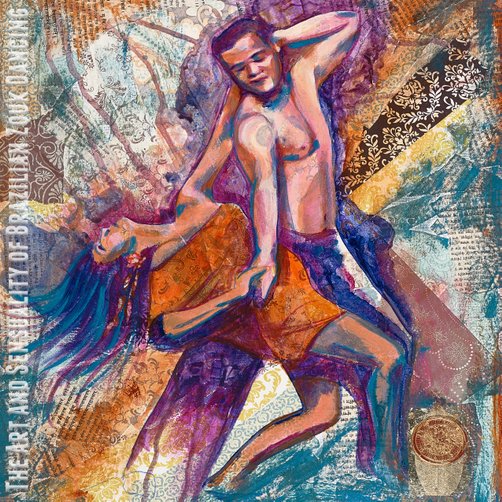
The Art and Sensuality of Brazilian ZOUK Dancing
By Marie Alonzo Snyder
Marie Alonzo Snyder presents a clear and helpful introduction and guide for anyone interested in learning about ZOUK the fast growing partner dance in her debut book.
Marie has been dancing ZOUK for over 5 years and recently brought this beautiful dance to Hawai‘i.
ZOUK DANCE IN EUROPE/NETHERLANDS
(Research made 2014 by Charlotte Mathiessen)